
KCCIRC Quantifies “Macroscopic Genomic Chaos” for Definitive Tumor Detection
Headline: “Engine A” Deploys Pseudo-LOESS GC Normalization to Identify Pathological Aneuploidy. To establish a computational “noise floor” for a healthy genome, KCCIRC’s Frag-Sure “Engine A” partitions the genome into 500kb non-overlapping segments and applies pseudo-LOESS GC normalization. The system then utilizes a highly robust Median Absolute Deviation (MAD) statistic to quantify macroscopic chromosomal chaos and […]
Topological Inference by KCCIRC Powers In-Silico Drug Repurposing
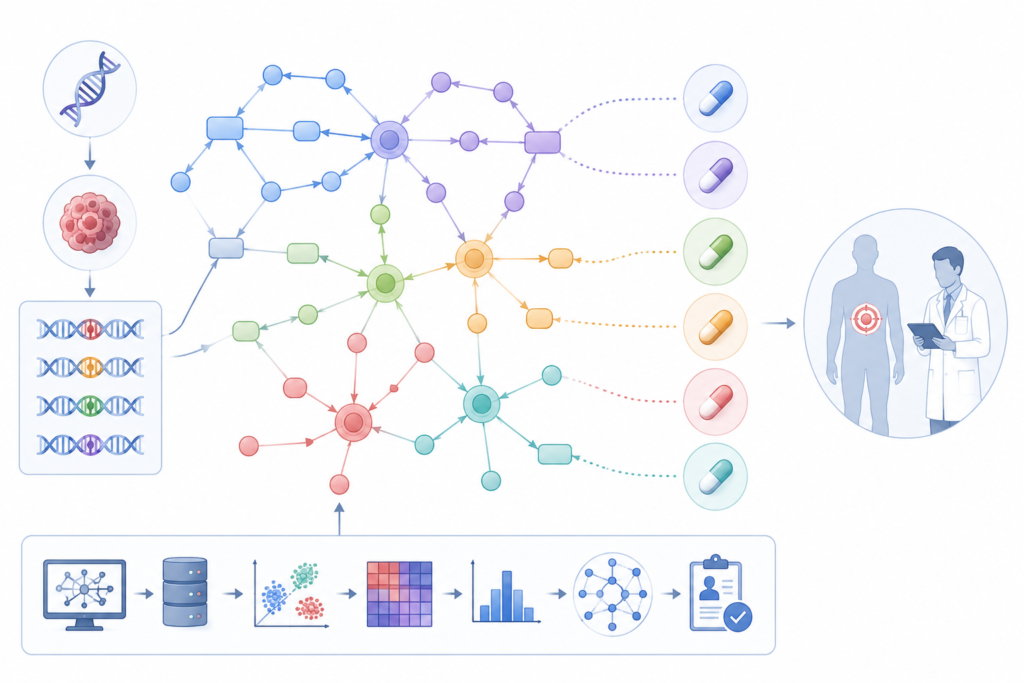
Headline: Mathematical Algorithmic Inference Identifies Novel Applications for Existing Pharmacological Agents. KCCIRC’s Knowledge Graph Engine possesses the ability to compute secondary and tertiary network relationships using proprietary multi-step semantic inference algorithms. By mathematically inferring links between genetic variants, pathway nodes, and drug targets, the system delivers instantaneous precision oncology tumor board support and drives highly […]
KCCIRC Deploys Military-Grade Cryptography for Clinical Diagnostic Compliance

Headline: Immutable Traceability Added to Frag-Sure Pipeline to Ensure Strict CAP/CLIA and FDA Auditability. Recognizing that computational chain-of-custody is as critical as biological assays, KCCIRC integrated “Module 0” into its Frag-Sure pipeline. Before processing begins, the system generates an immutable SHA-256 cryptographic hash that binds the primary input filepath, the machine’s MAC address, and the […]
KCCIRC Achieves Zero-Latency Graph Queries with “Hybrid Relational-Graph Storage
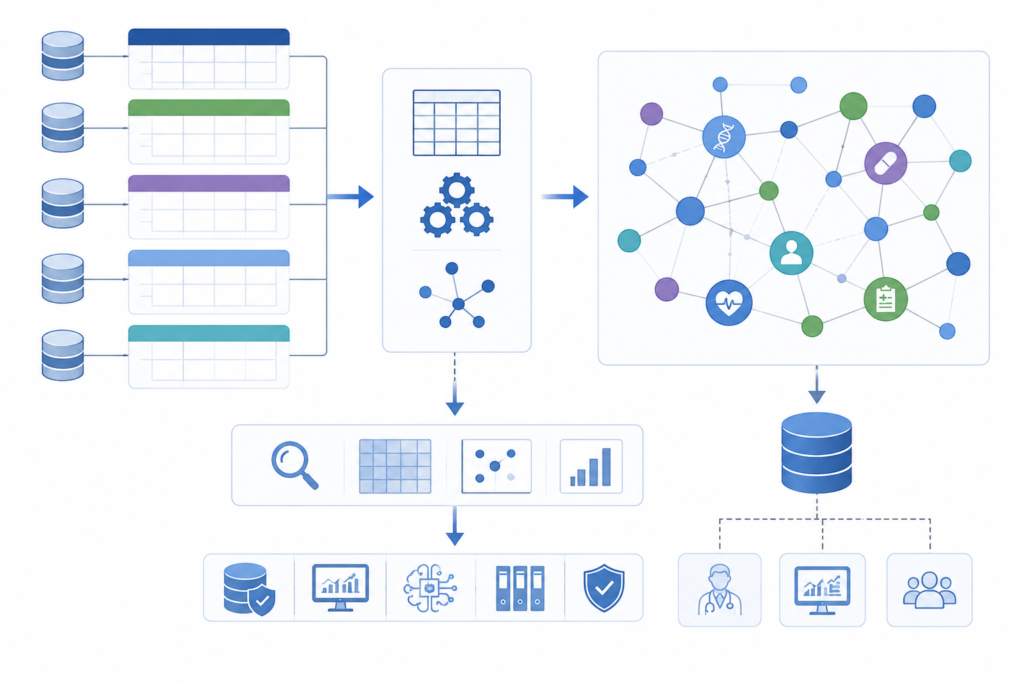
Headline: Proprietary Edge-Flattening Algorithm Bypasses the Need for Expensive Native Graph Databases. Bypassing computationally expensive, RAM-heavy native graph databases, KCCIRC’s Annotator utilizes a specialized Hybrid Relational-Graph Storage (HRGS) paradigm. By deploying a bidirectional graph flattening protocol and mapping gigabytes of data directly into system memory, the architecture achieves sub-millisecond, zero-latency analytical queries on standard consumer-grade […]
KCCIRC Pioneers “Fragmentomic” Verification to Authenticate Tumor DNA
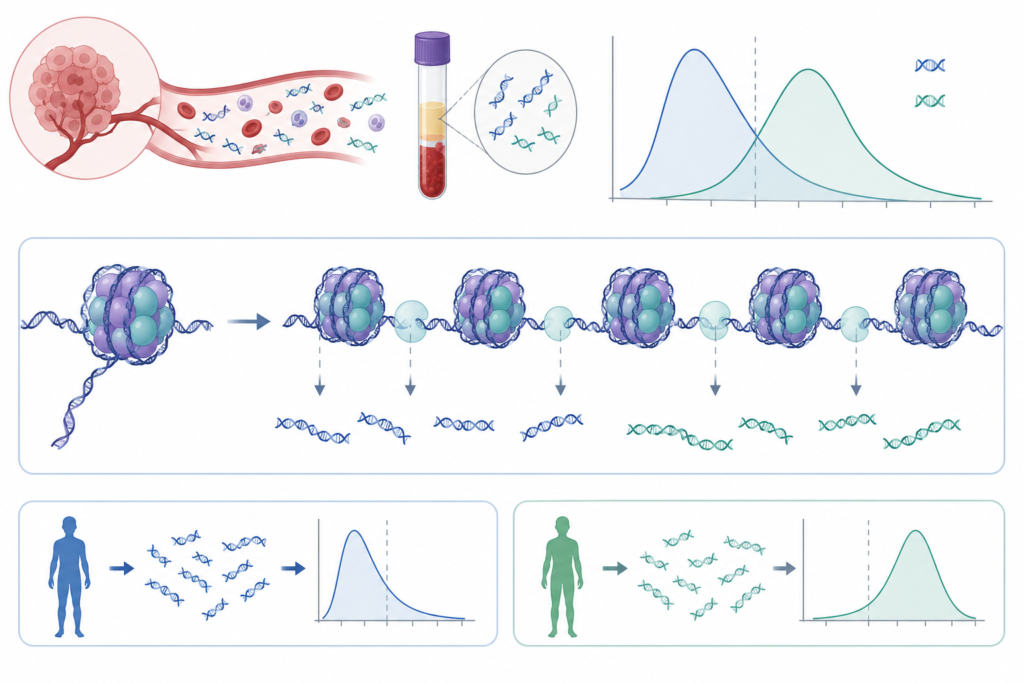
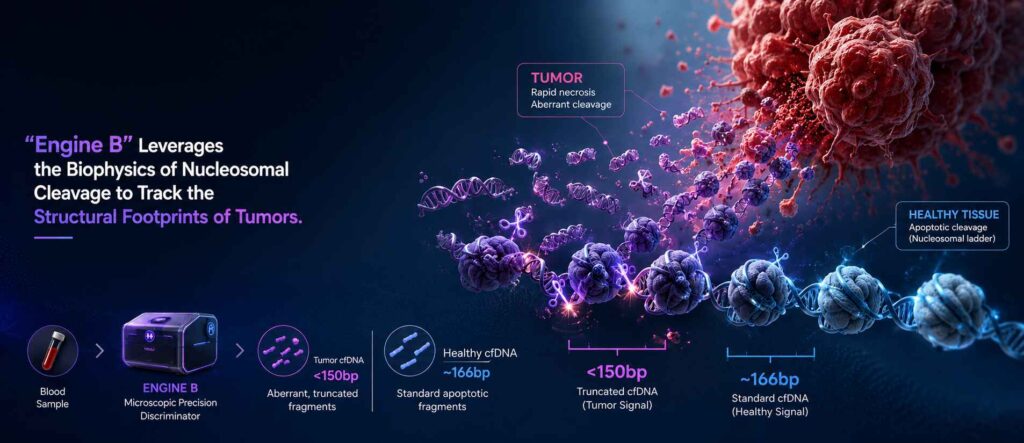
Headline: “Engine B” Leverages the Biophysics of Nucleosomal Cleavage to Track the Structural Footprints of Tumors. Pushing the boundaries of physical biology, KCCIRC’s Frag-Sure pipeline features Engine B, a microscopic precision discriminator that operates on the biophysics of endonucleolytic cleavage. Because tumor cfDNA undergoes rapid necrosis and aberrant cleavage, the engine isolates DNA fragments systematically […]
KCCIRC Eradicates AI Hallucinations in Clinical Healthcare Queries

Headline: Semantic AI Scaffolding and Vector Embeddings Transform Knowledge Graph into a “Ground Truth” AI Memory Bank. To safely bridge topological graphs with Generative AI, KCCIRC integrated advanced Semantic AI Scaffolding into its Annotator system. By combining inverted semantic indexing with a continuous vector embedding architecture, the database now serves as a deterministic Retrieval-Augmented Generation […]
KCCIRC Solves the Liquid Biopsy “False Positive” Crisis with Dual-Orthogonal Engine
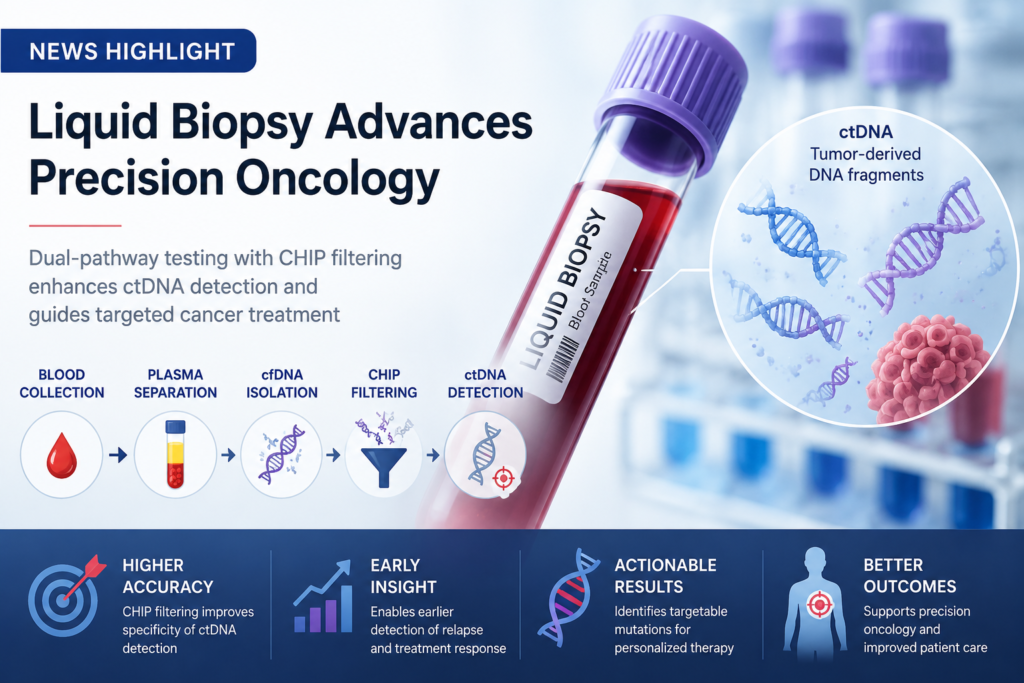
Headline: Revolutionary “DualSignal Frag-Sure” Architecture Overcomes Biological Noise and CHIP. To tackle the fundamental challenge of distinguishing ultra-low frequency somatic tumor mutations from healthy, aging hematopoietic stem cells (CHIP), KCCIRC has deployed a novel “Dual-Orthogonal Engine Architecture” for Minimal Residual Disease (MRD) monitoring. This system definitively resolves signal-to-noise issues by integrating two independent biological dimensions: […]